

Equines and large animals play a pivotal role for many communities around the world. Yet many face a life of hardship, injury or mistreatment, without access to the veterinary care they desperately need. This can be due to a lack of training and knowledge within communities, the distance to travel for veterinary services, and the cost of veterinary care. At WVS we are working to change this. In 2025, over 67,000 equines and large animals were treated through our global projects.
How we help:
Veterinary care
Through our mobile clinics we provide essential veterinary care to communities in need with routine health checks and preventative treatment, including treating any injuries or illnesses.
Veterinary training
To ensure lasting change, our expert team focuses on bridging gaps in veterinary knowledge by offering training opportunities for veterinary professionals and equipping owners with essential support and guidance. This way, we can build local knowledge, and animals will continue to receive high quality care after we have gone.
Veterinary aid
Through our veterinary aid parcels, we equip local institutions and organisations with the vital supplies, equipment and medication they need to provide the best care possible.
Keep reading to hear updates from our equine projects.
Senegal
In February 2026, we established a new collaboration with ÉcoleInter-États des Sciences et Médecine Vétérinaires (EISMV), a regional veterinary school based in Dakar. This veterinary school is the only provider of veterinary education to 14 countries across West and Central Africa. Through this new partnership, EISMV now has a fully operational equine clinic, which is a major advancement that will improve and increase the school’s training capabilities. Throughout the month of February, the team worked hard to get this clinic fully equipped, staffed and open to patients – with 73 horses and donkeys being seen within the first month.
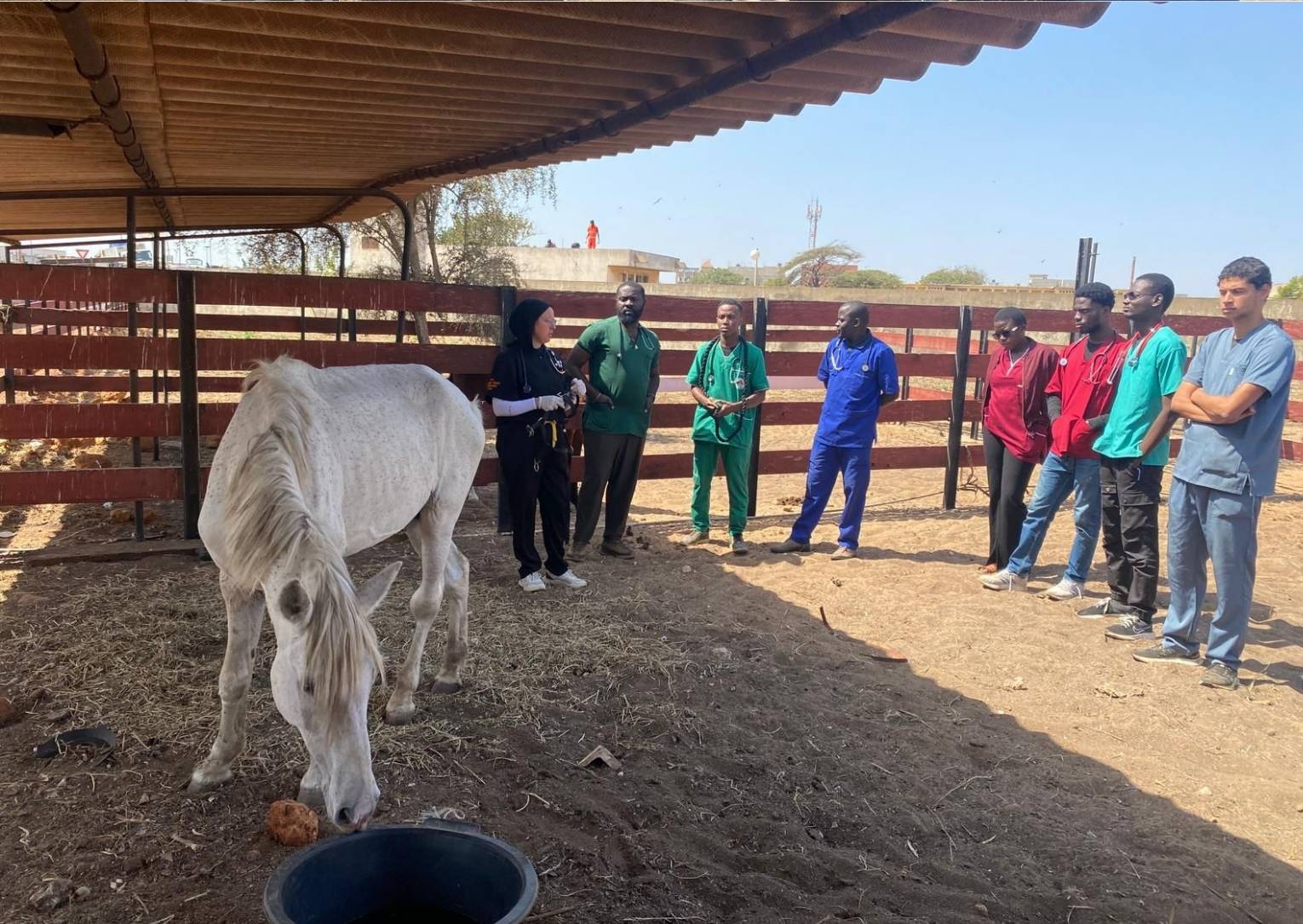
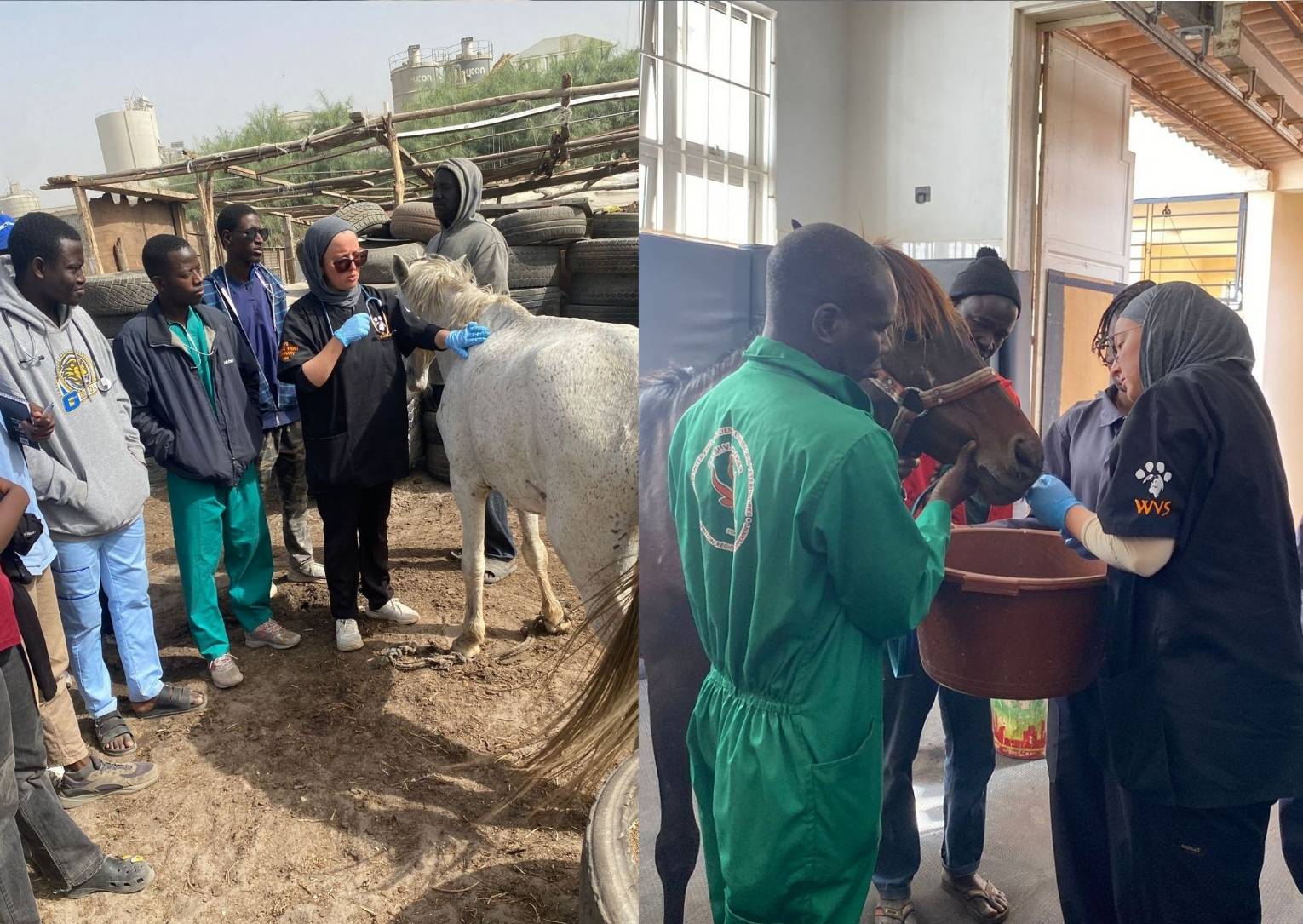
WVS Taskforce vet, Dr Khouloud, is currently in Senegal offering invaluable support to get this project up and running. She has been supporting with establishing an internship, with new interns getting stuck into all aspects of patient care during the first month, with final year veterinary students also actively involved.
“The first two weeks in the working equid medicine internship have been deeply rewarding. Under the mentorship of Dr. Khouloud and Dr. Kabura, I have already been actively involved in intensive care. This experience is truly strengthening my commitment to improving animal welfare standards for the benefit of our communities.” Côme Christalie Gladyce Koukimina, EISMV intern.
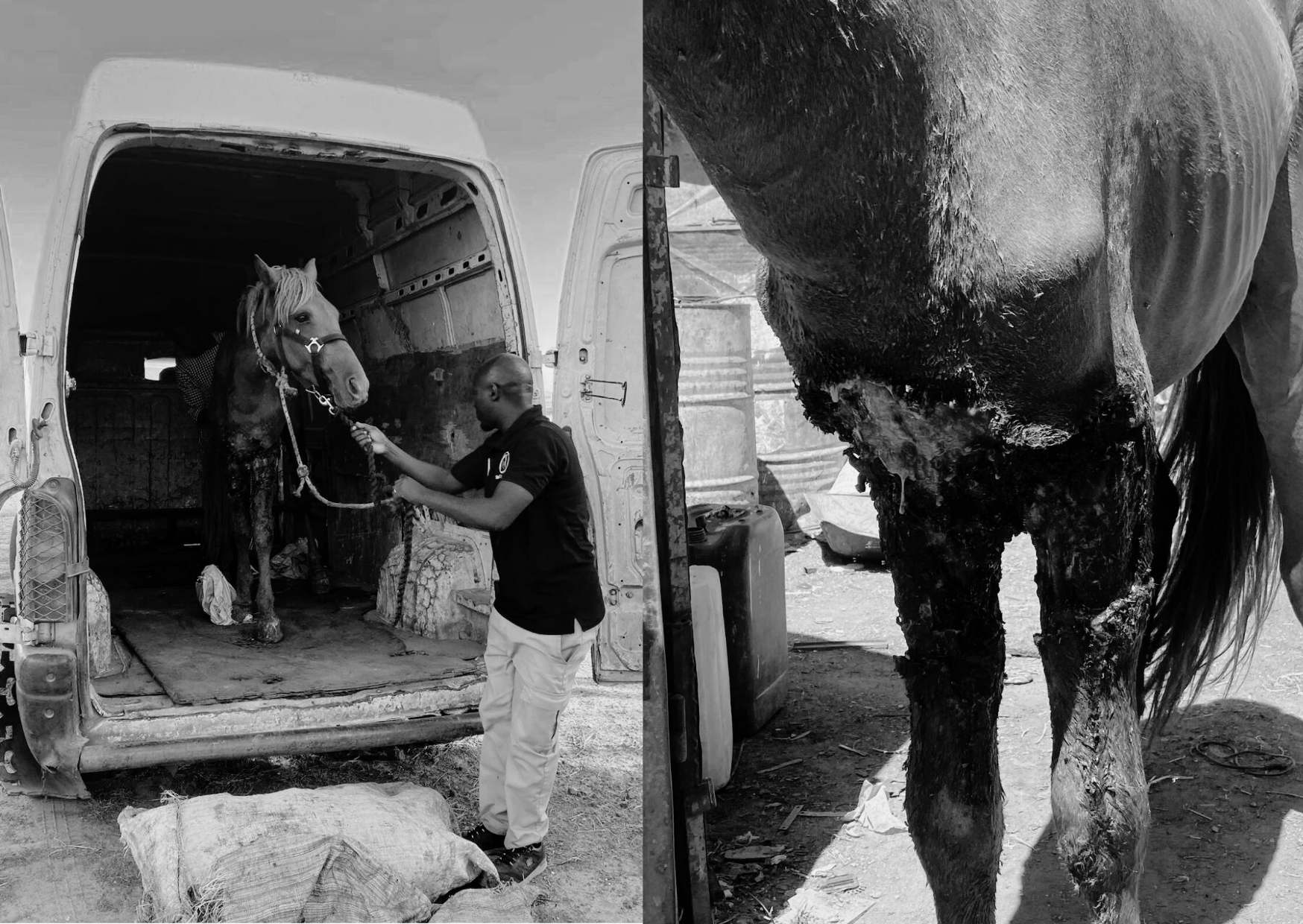
One of the many patients who was able to receive urgent care at the new operational clinic for their horrific wound.
Mozambique
Donkeys are vital in Mozambique, supporting with agricultural work, fetching water, carrying heavy loads, unlocking employment opportunities and providing families with transportation. Despite this, they fall through the gap of veterinary infrastructure. If they suffer from an injury or disease this has ramifications for not only the donkey's welfare but also the families who rely on them.
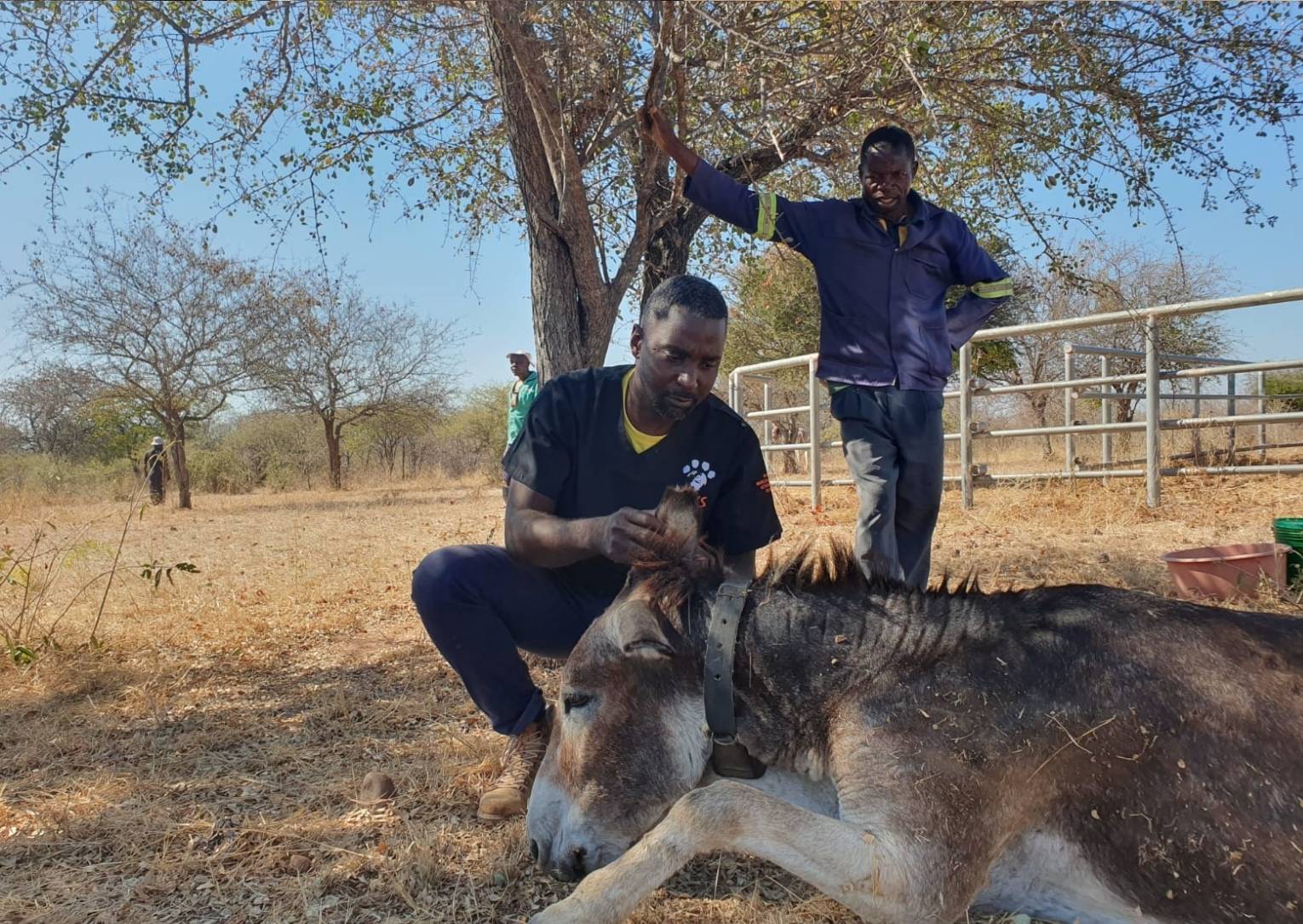
The WVS Mobile Veterinary Clinic runs out of the veterinary school at Eduardo Mondlane University in Maputo. The expert team, joined by veterinary students, travel around to provide vital care to working donkeys. They provide both routine and reactive care, with preventative treatment involving parasite control, hoof and dental care, and nutritional management. They also listen to owners concerns and offer guidance on a range of issues from harness fitting to handling practices. During the clinics, students get the opportunity to learn valuable practical skills and develop their understanding of veterinary work in rural environments.
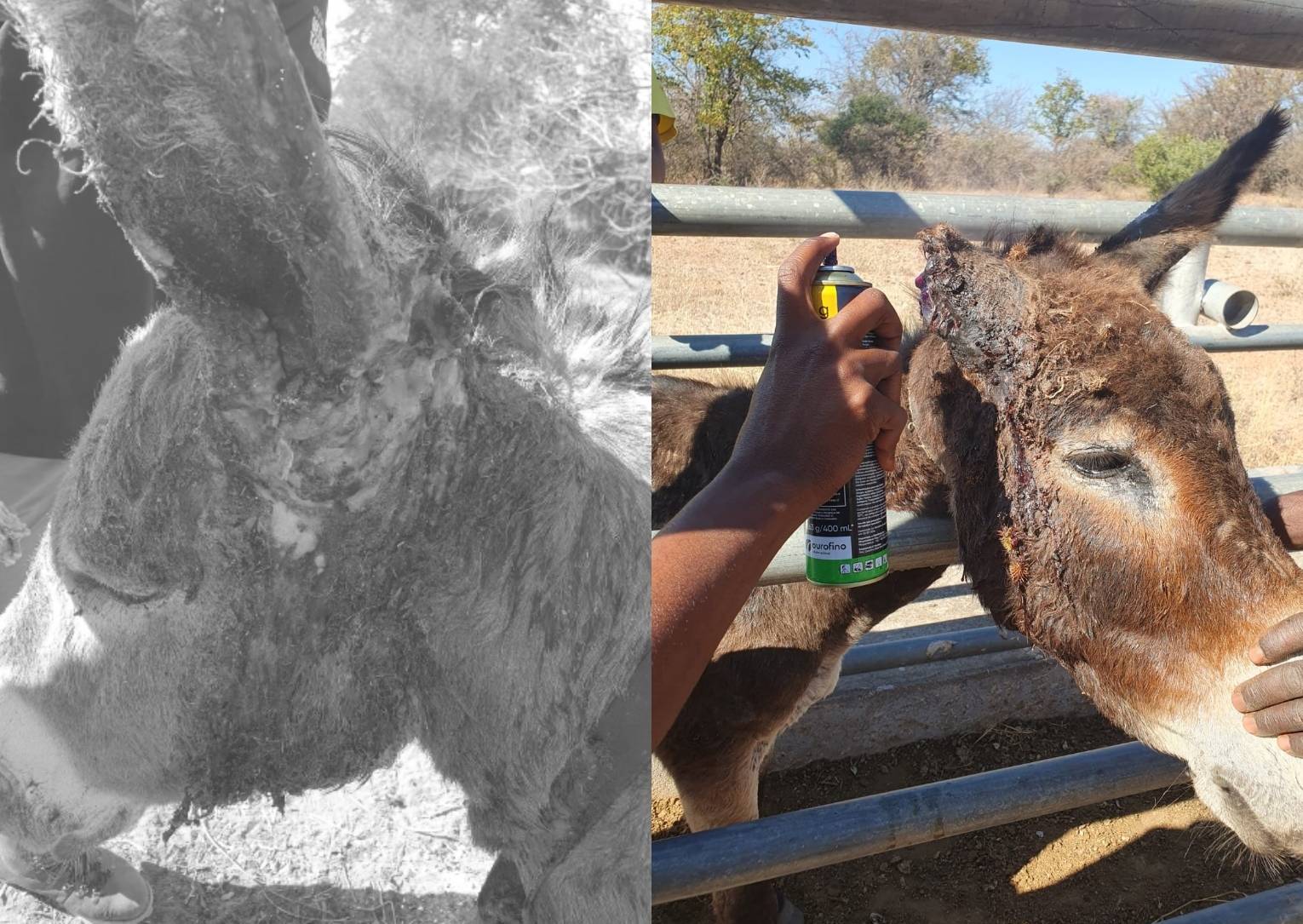
Horrific injuries that the team have seen from donkeys fighting. We have started providing field castration through the mobile clinic, helping to reduce fighting between male donkeys and prevent injuries.
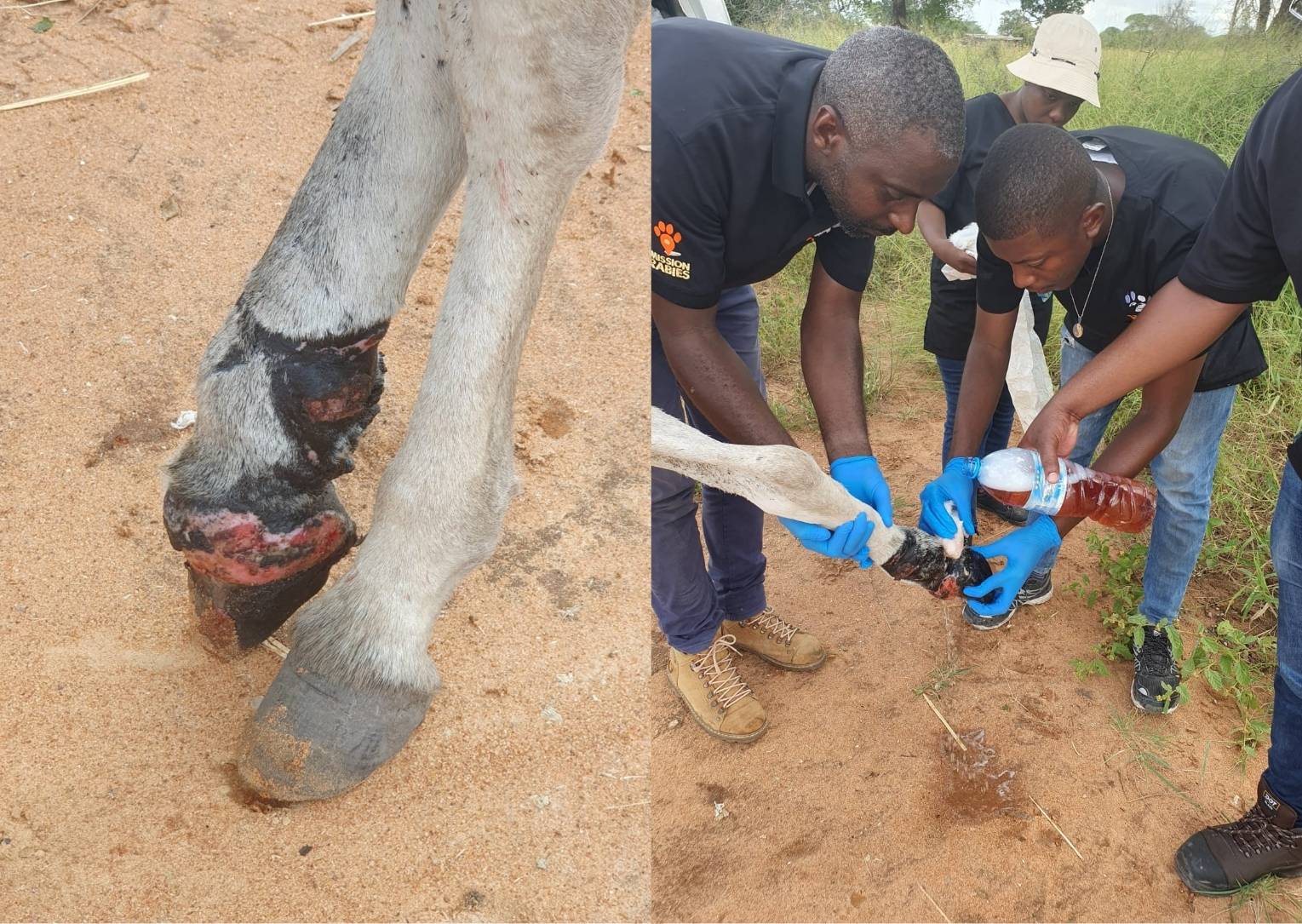
A donkey was bought to the clinic with a painful injury on their leg from a rope being caught. The team cleaned this wound and covered it with bandages to allow it to heal.
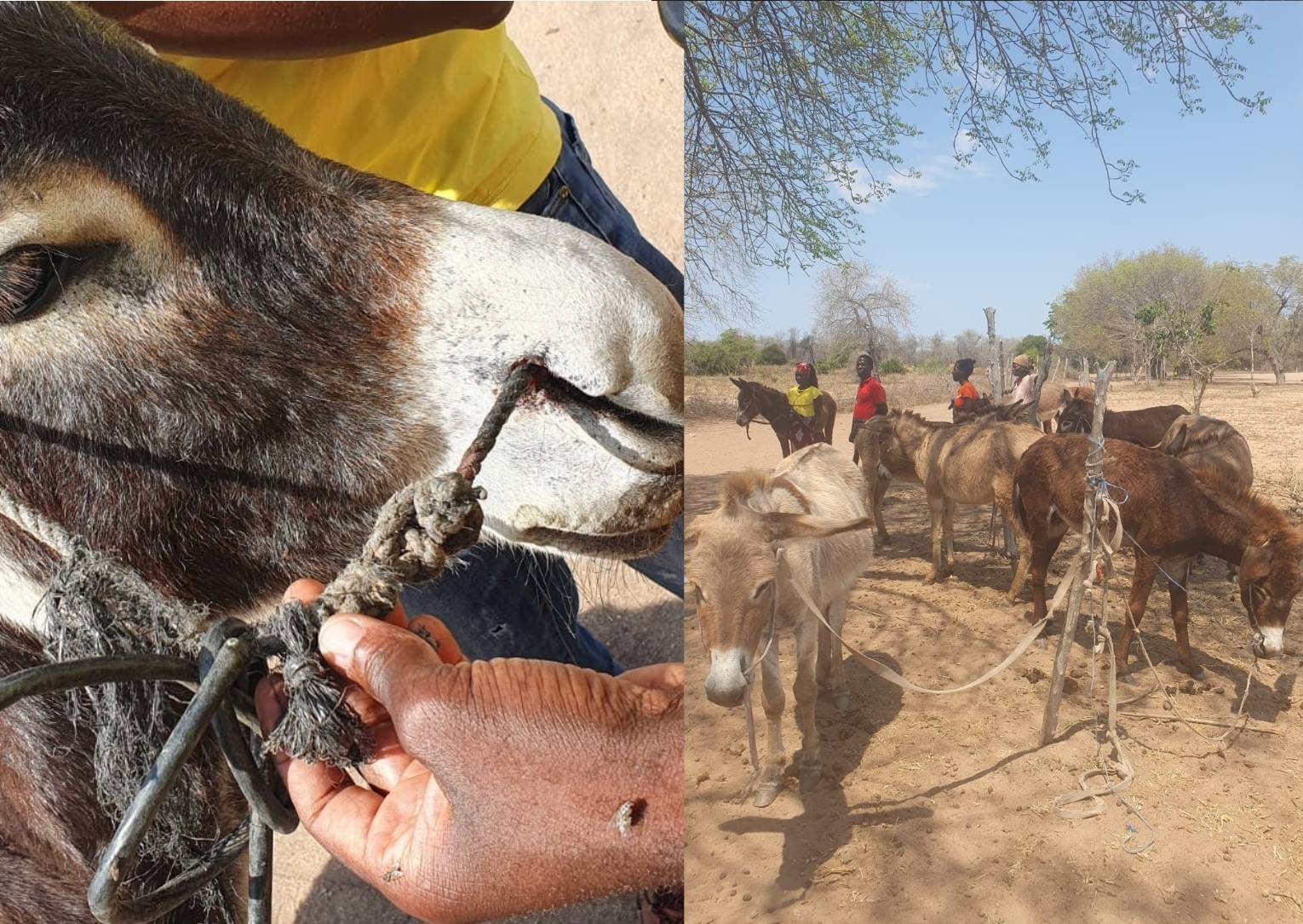
The team see a range of inappropriate harnesses, like ropes pierced through the sensitive nasal septum. We engage with owners to discuss alternative harnesses. This is a small change that can make the world of difference for the welfare and health of a working donkey.
Argentina
In Argentina we work in partnership with local NGO Caballos Quilmes (CQ) and Universidad Nacional De La Plata (UNLP) to address the needs of the Quilmes community. Quilmes is one of the worst cities in terms of animal abuse, where it is estimated that a carriage horse dies every 8 hours. The dedicated team at CQ rescue neglected and abused horses and are a lifeline for equines in the community. The typical horses seized by the police are cases of abuse, severe dehydration, botched farrier treatment, bone deformities, wounds and fractures.
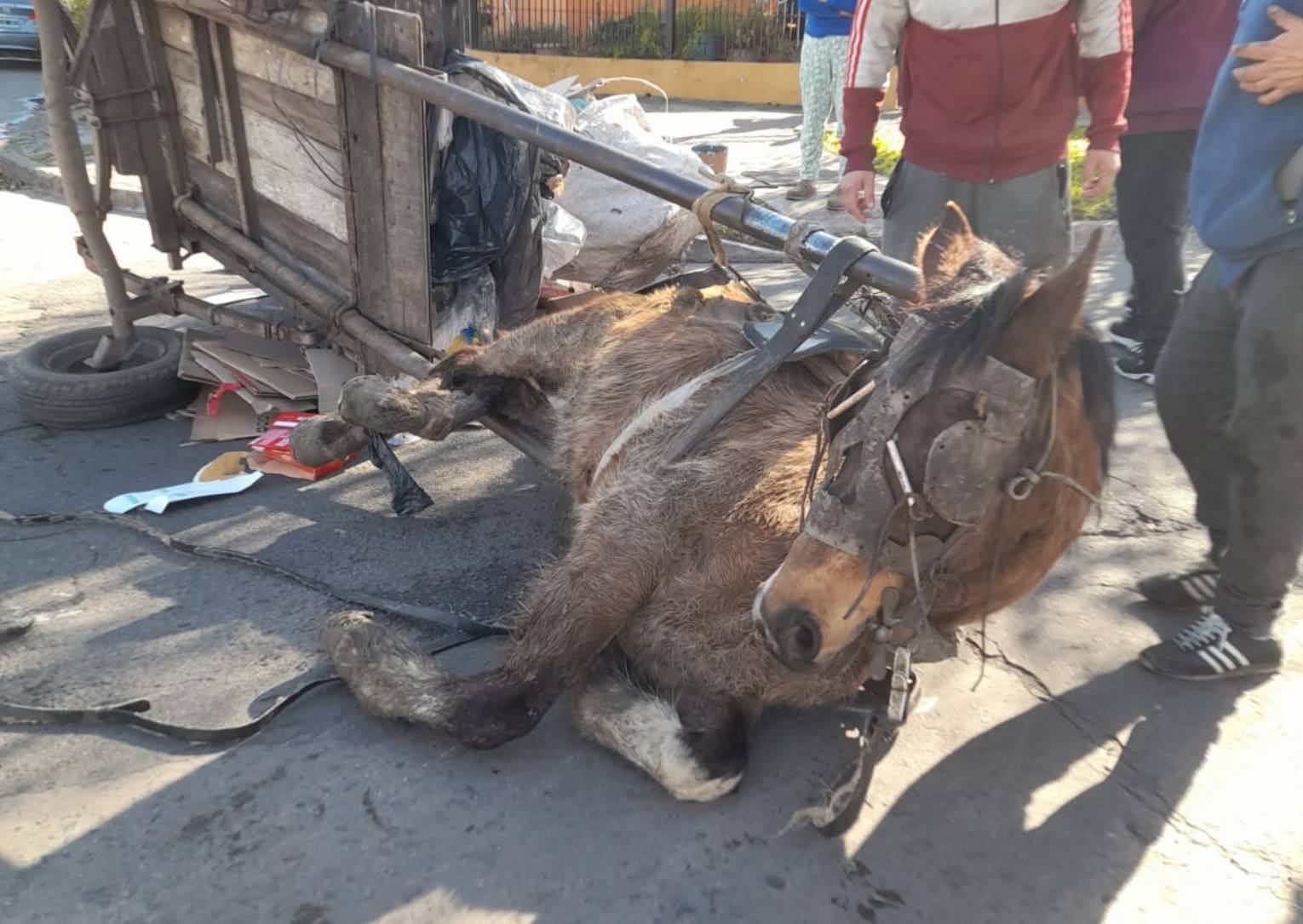
To ensure that equines can receive the best care possible, we provide ongoing support to CQ through the provision of veterinary equipment, supplies and medication, sending veterinarians and training local vets and volunteers to improve access to care.
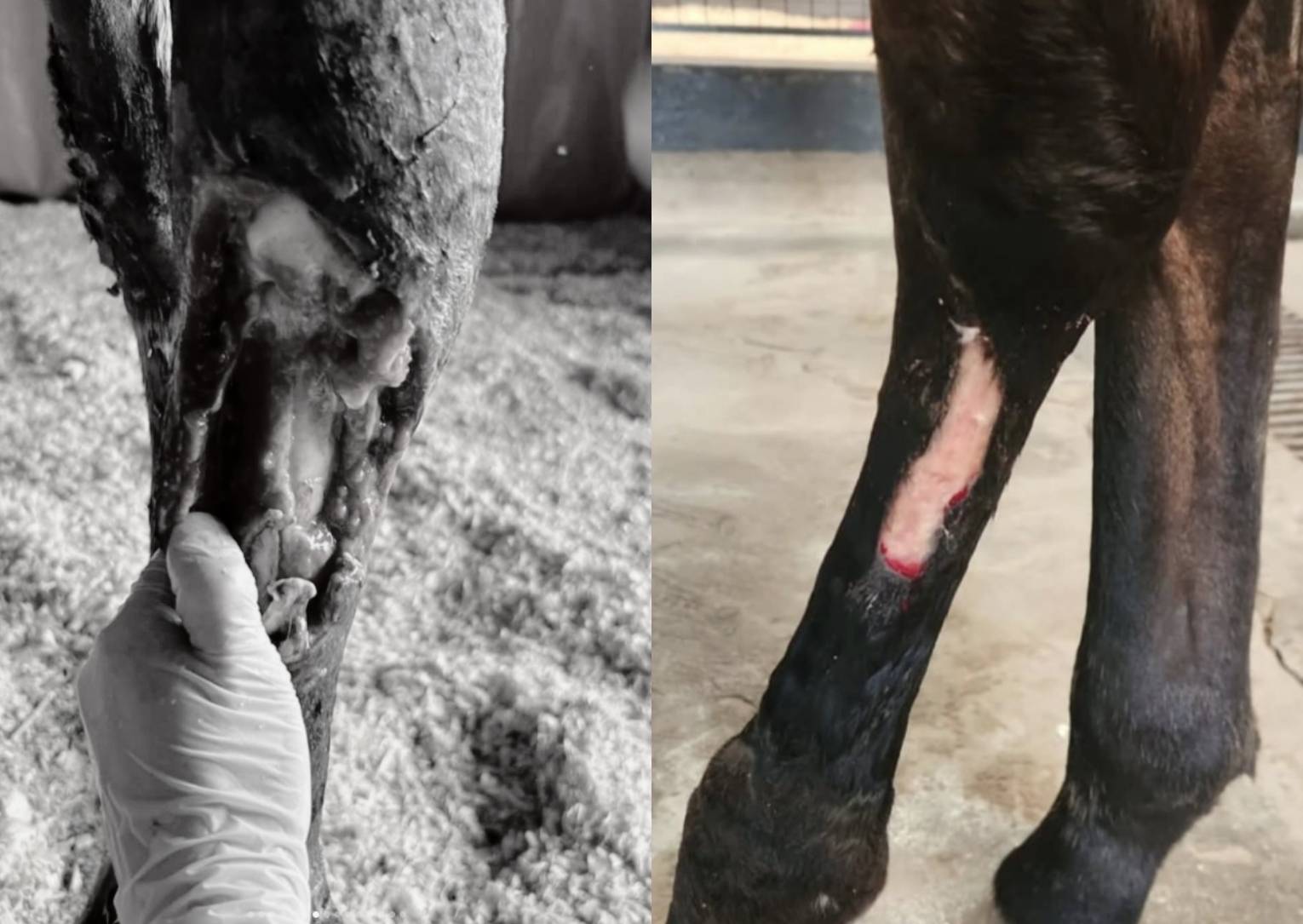
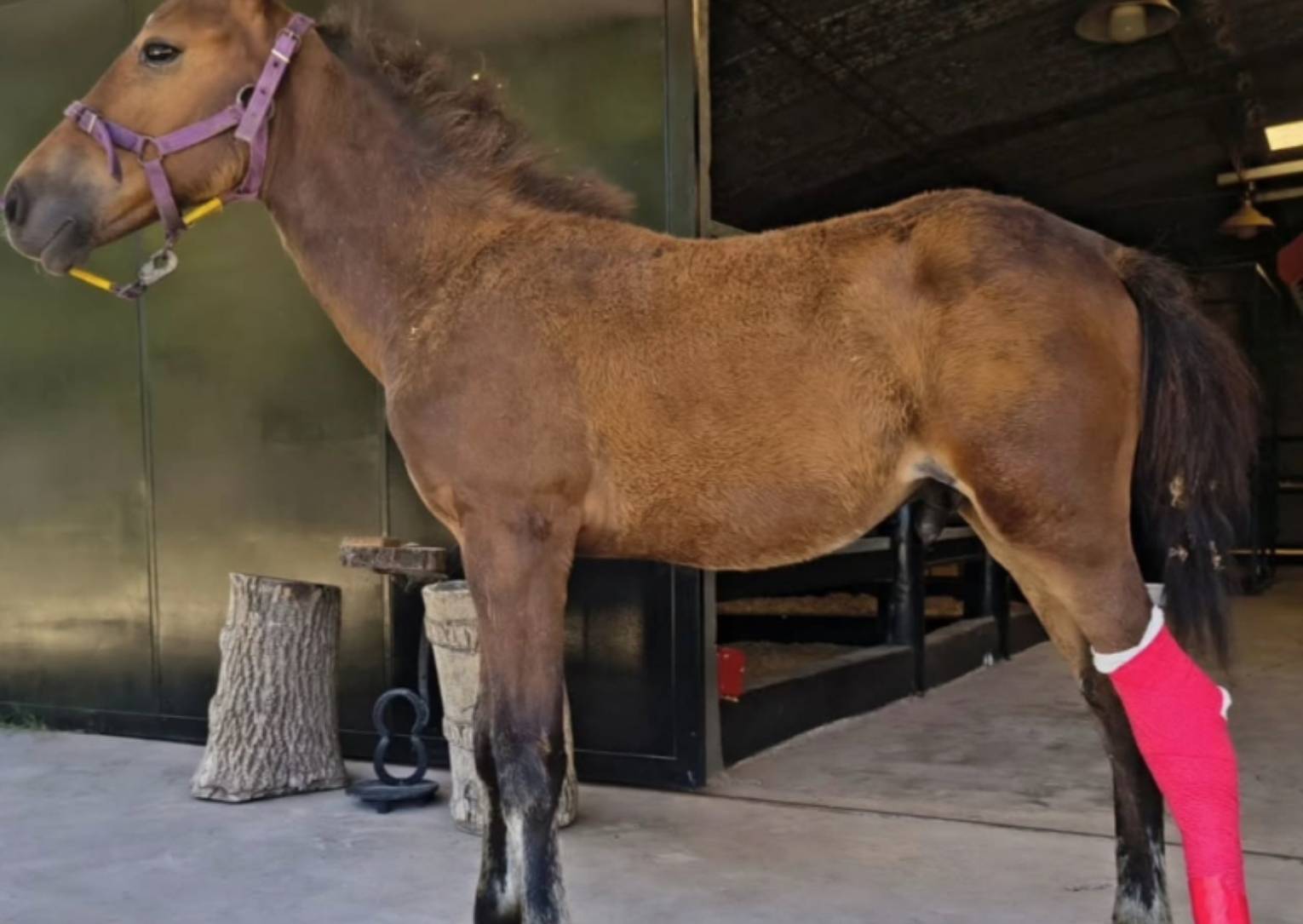
Brillito was bought to CQ in severe pain and was unable to sit unaided. He had a deep wound on his hind limb, his bone was exposed and it was infested with maggots. Thanks to the amazing team at CQ the injury has healed well and Brillito is doing much better.
Zambia
Like in many other African countries, donkeys play a pivotal role in many communities across Zambia. Zambezi Working Donkey Project (ZWPD) is the only organisation working to care for donkeys in the country, offering free treatment and care, and rescue and rehoming service for abandoned and neglected donkeys. We established a collaboration with ZWPD in 2025, to support with their vital work and create a regional hub for large animal practical training.
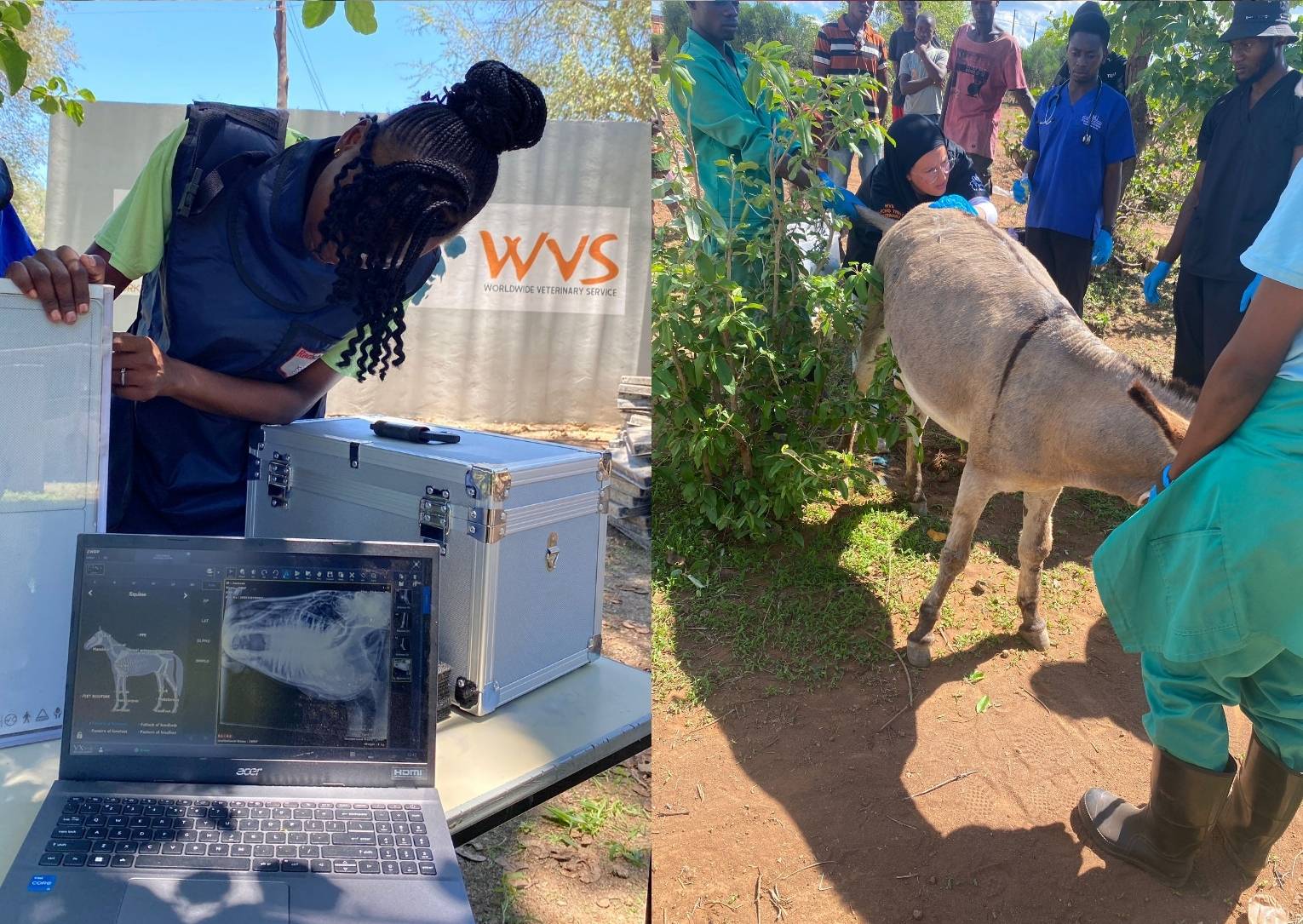
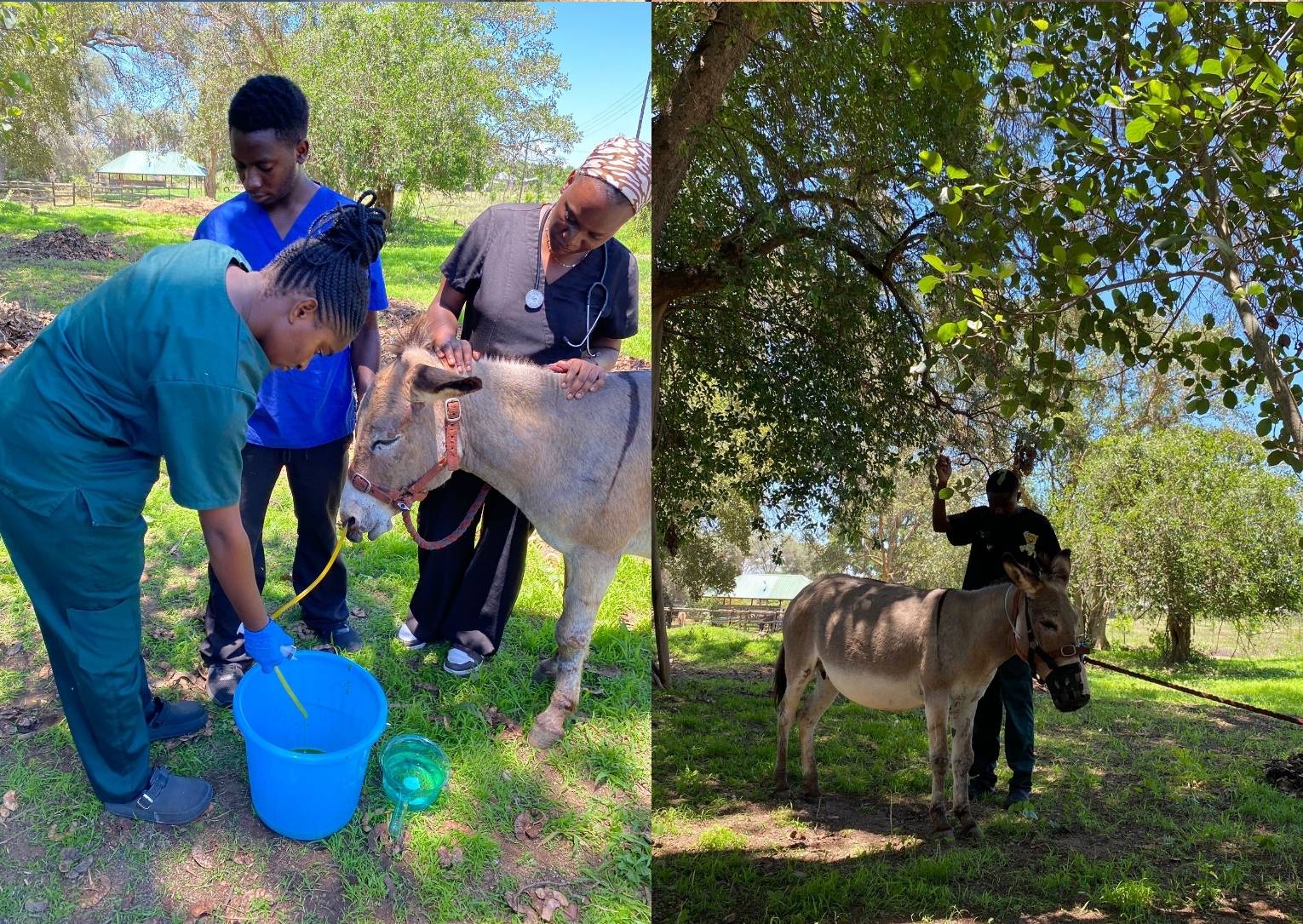
Our expert team has been supporting ZWPD in developing a comprehensive theoretical and practical training programme to get veterinary students comfortable with fundamental equine skills. They hosted their first group at the end of 2025. There is nowhere else in Zambia providing this practical equine training. By involving more students in the project, the next generation of Zambian vets will have a better understanding of equine care in rural areas, improving access to this crucial veterinary care.
In addition, we supported ZWPD with the opening of their own state-of-the-art Veterinary Diagnostic Laboratory, offering radiography, ultrasonography, biochemistry and so much more. This is the first of its kind in the region, allowing ZWPD to increase their breadth of services offered to donkeys, while also allowing other organisations in the area to use this new equipment to help animals in need.
Get involved in the mission to create a brighter future for all animals
We are working to create a kinder world for animals around the world. We need your help to ensure every animal has access to care in their time of need. Become part of WVS by joining as a member, receive our global updates by signing-up to our newsletter or give a life-saving donation to help animals in need.